
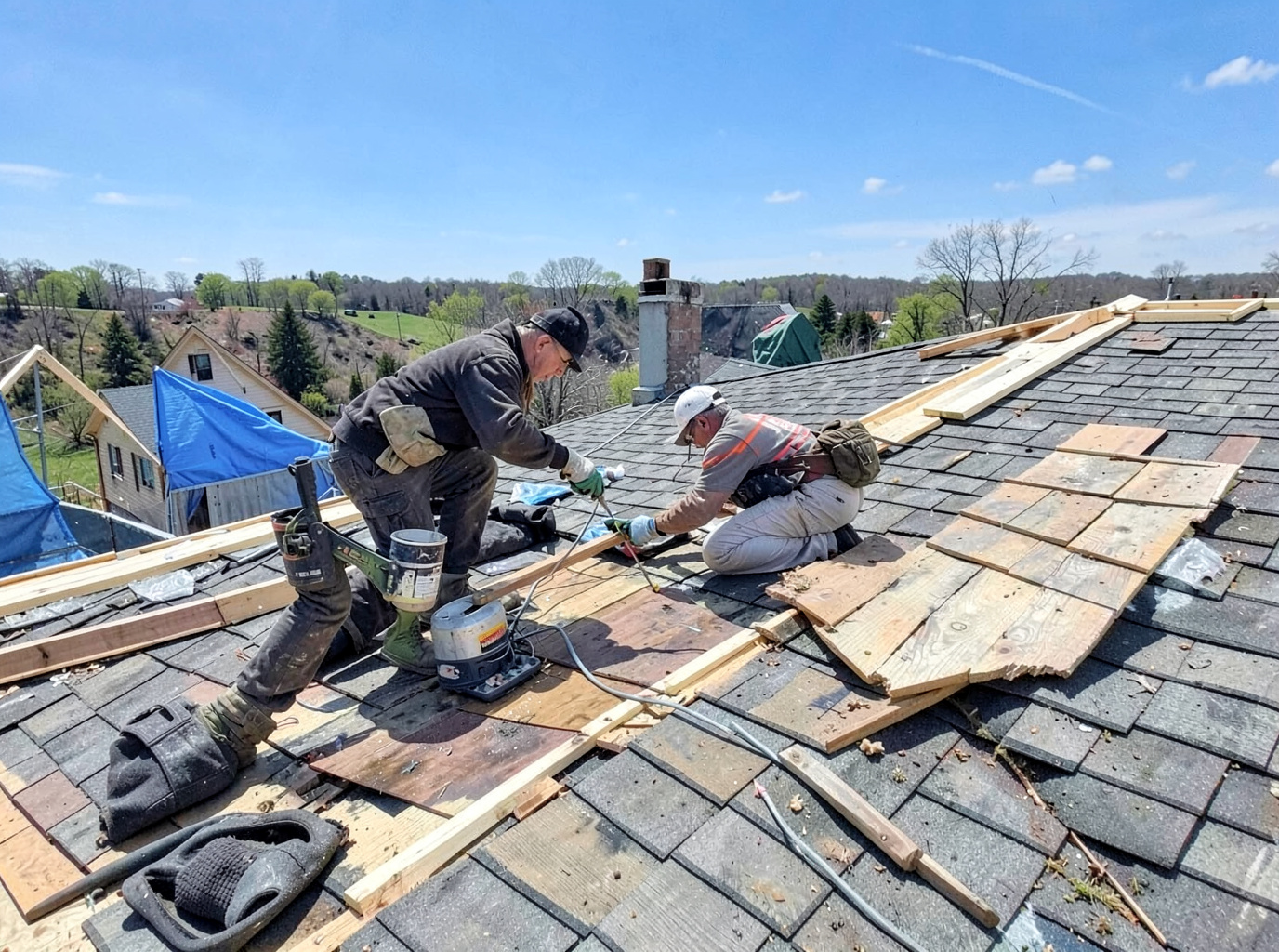
Great Falls homes in Downtown and Black Eagle often date from the early to mid-1900s, so roof decks can show decades of layered shingles and varying rafter spacing. Installation starts with full deck inspection for rot or sagging, especially on steeper pitches near the Missouri River where wind loads increase. Cold winters require ice-and-water shield along eaves at least six feet up, plus proper ventilation to prevent ice dams that form when daytime sun melts snow that refreezes at night.
Metal panels perform well against the dry summers and occasional hail near Giant Springs, but they need exact screw placement and butyl tape sealing to handle temperature swings that reach below zero in January. Asphalt shingles remain common on West Great Falls ranches because they match existing code setbacks and allow easier ridge vent addition. Crews always pull permits through Cascade County and match flashing to existing chimney and valley details rather than using universal kits.
Installation crews work around the short spring and fall windows when temperatures stay above 40 degrees for adhesive curing. Skipping underlayment upgrades on older homes near the C.M. Russell Museum area leads to leaks within two seasons once snow load returns. Every job includes ridge ventilation sized to the attic square footage to keep insulation dry during the warm, low-humidity summers.
Technician insight
In Great Falls the thing that catches most people out with Roofing Installation is skipping extra ice-and-water shield on the north-facing eaves of older Black Eagle homes; those roofs get the heaviest ice dam pressure once winter temperatures drop and the warm dry summers have already dried out the old felt.
West Great Falls Ranch Roof
Homeowner noticed attic moisture after heavy spring melt. Inspection showed missing underlayment and blocked soffit vents on a 1970s ranch. Crew removed three layers, replaced damaged deck sections, installed full ice shield and balanced ridge vent. New architectural shingles now match neighboring roofs and pass Cascade County inspection.
Roofing Installation Services We Offer
✓Asphalt Shingle Installation
Full tear-off and replacement using architectural shingles rated for cold-weather flexibility and wind uplift common along the Missouri River corridor.
✓Metal Roof Installation
Standing-seam or screw-down panels installed over existing decks or new strapping, with thermal expansion joints suited to Great Falls temperature swings.
✓Ice and Water Shield Application
Six-foot minimum coverage along eaves plus full valley and penetration coverage to stop ice dam leaks during Cascade County winters.
✓Ridge Vent and Attic Ventilation
Continuous ridge vent cut and balanced with intake vents to reduce moisture buildup after warm dry summers.
✓Flashing and Valley Replacement
Custom step flashing and woven valleys matched to existing chimneys and roof transitions on older Downtown Great Falls homes.
✓Underlayment Upgrade
Synthetic underlayment installed over decking to add secondary water protection before primary roofing material goes down.
Roofing Installation Cost in Great Falls, MT
| Service | Typical Range | What Affects It |
|---|---|---|
| Asphalt Shingle Roof | $6,500–$14,000 | Varies with square footage, number of layers, and pitch on Cascade County homes. |
| Metal Panel Roof | $9,000–$18,500 | Higher for standing seam and complex valleys near river corridors. |
| Ice And Water Shield Add-On | $800–$2,200 | Depends on linear feet of eaves and number of valleys. |
| Ridge Vent Installation | $450–$950 | Based on ridge length and existing ventilation balance. |
Ranges are typical for Great Falls, MT and confirmed with an exact written quote before any work starts.
How it works
- 1
Site Assessment
Measure roof, check deck condition, note existing ventilation, and photograph all penetrations on homes in Black Eagle or West Great Falls.
- 2
Material Selection
Review shingle or panel options that handle cold winters and wind exposure near the Great Falls of the Missouri.
- 3
Deck Preparation
Remove old layers, replace damaged sheathing, and install ice-and-water shield and synthetic underlayment.
- 4
Installation
Lay new roofing with proper nailing patterns, sealed valleys, and ridge vent integration.
- 5
Final Walk-Through
Inspect every seam, flashing, and ventilation point before cleanup and county permit close-out.
Pricing
Upfront written quotes based on roof size, pitch, layers to remove, and chosen material.