
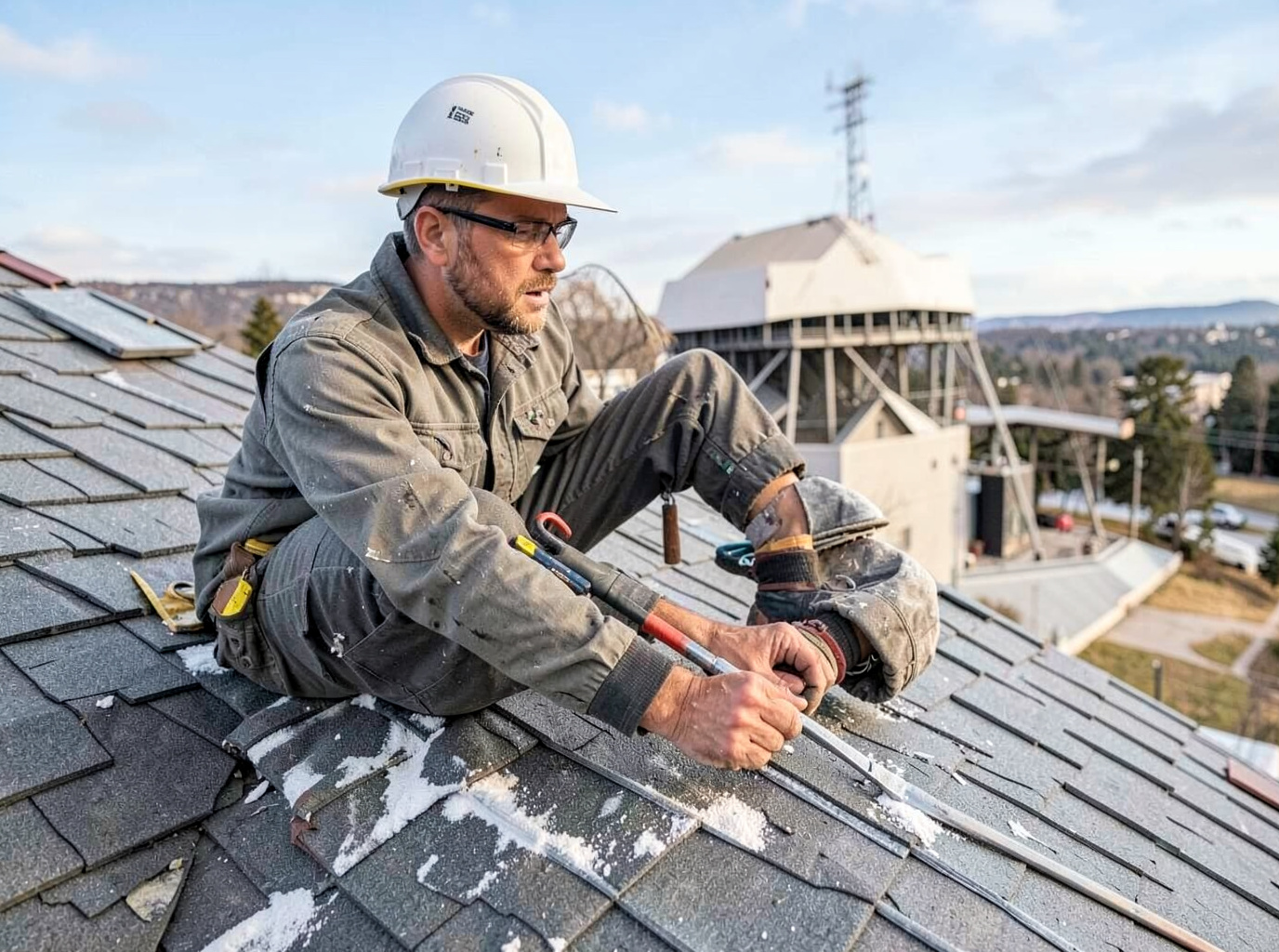
Great Falls sits in Cascade County where winters bring repeated freeze-thaw cycles and heavy snow loads on older homes in Downtown Great Falls and Black Eagle. Asphalt shingles on houses built before 1980 often fail at valleys and eaves first because ice dams push water under the underlayment. Metal panels hold up better against the dry summer UV and occasional high winds that sweep across West Great Falls, but they require proper snow retention clips so slides do not damage gutters or landscaping below.
Many roofs here also sit near the Missouri River corridor where humidity spikes during spring runoff. That moisture combined with attic heat loss creates condensation on the underside of decking, especially in homes around Giant Springs and the C.M. Russell Museum area. We always check ridge ventilation and baffles during every inspection because blocked soffits are the most common reason new shingles blister within two seasons.
Helena and Billings crews sometimes bring lighter underlayment suited to their climates; that material cracks faster here once temperatures drop below zero. We stock 30-pound felt and self-adhered ice-and-water shield rated for the actual snow depths recorded at the Great Falls airport. Permits through the City of Great Falls require 130 mph wind ratings on new installations, which rules out several economy shingles that look fine on paper but fail local wind tests.
Technician insight
In Great Falls the thing that catches most people out is skipping the ice-and-water shield on the north eaves of homes in Black Eagle and Downtown. Those roofs face the river and collect the first heavy snow; without the extra membrane, meltwater works under the shingles every spring and you end up replacing the whole roof two seasons later instead of just fixing a few courses.
West Great Falls Ice Dam Leak
Homeowner noticed water stains on the second-floor ceiling after the first big January thaw. We found the original felt underlayment had failed along the north eaves where wind had packed snow against the house. We removed the lower three courses of shingles, added self-adhered membrane up to the first course above the eaves, and reinstalled matching shingles. No further leaks appeared the following spring.
Roofing Contractor Services We Offer
✓Asphalt Shingle Replacement
Full tear-off and replacement using 30-year architectural shingles with ice-and-water shield at eaves and valleys to handle Great Falls freeze-thaw cycles.
✓Metal Roof Installation
Standing seam and screw-down metal systems installed with snow guards for homes in Black Eagle and West Great Falls exposed to river corridor winds.
✓Ice Dam and Leak Repair
Targeted removal of ice dams followed by underlayment upgrades and ridge vent corrections on older Cascade County roofs that trap heat and moisture.
✓Gutter and Downspout Replacement
Seamless aluminum and steel gutters sized for heavy spring runoff from the Missouri River watershed, installed with proper pitch to prevent fascia rot.
✓Attic Ventilation Upgrade
Installation of ridge vents, soffit vents, and baffles to reduce condensation in homes near Giant Springs where summer humidity meets winter heat loss.
Roofing Contractor Cost in Great Falls, MT
| Service | Typical Range | What Affects It |
|---|---|---|
| Asphalt Shingle Replacement | $6,500–$11,000 | Depends on square footage and whether decking needs replacement after ice damage. |
| Metal Roof Installation | $12,000–$18,500 | Higher for standing seam; includes snow guards required on steeper Cascade County pitches. |
| Ice Dam and Leak Repair | $650–$1,800 | Varies with how many valleys must be opened and whether ridge ventilation is added. |
| Gutter Replacement | $1,200–$2,400 | Based on linear feet and choice of aluminum versus steel for heavy runoff areas. |
Ranges are typical for Great Falls, MT and confirmed with an exact written quote before any work starts.
How it works
- 1
On-Site Inspection
We walk the roof and attic, check for ice dam history, measure ventilation, and note wind exposure specific to the neighborhood.
- 2
Material and Scope Review
Homeowner receives a written list of shingles or panels, underlayment, and ventilation changes needed to meet Great Falls wind and snow conditions.
- 3
Tear-Off and Deck Repair
Old material removed, damaged decking replaced, and ice-and-water shield installed at eaves before new roofing begins.
- 4
Final Walk-Through
We review every penetration, valley, and vent with the owner and leave a maintenance checklist for the first spring thaw.
Pricing
Prices vary by roof size, pitch, and existing damage; most Great Falls homes fall in the ranges below.