
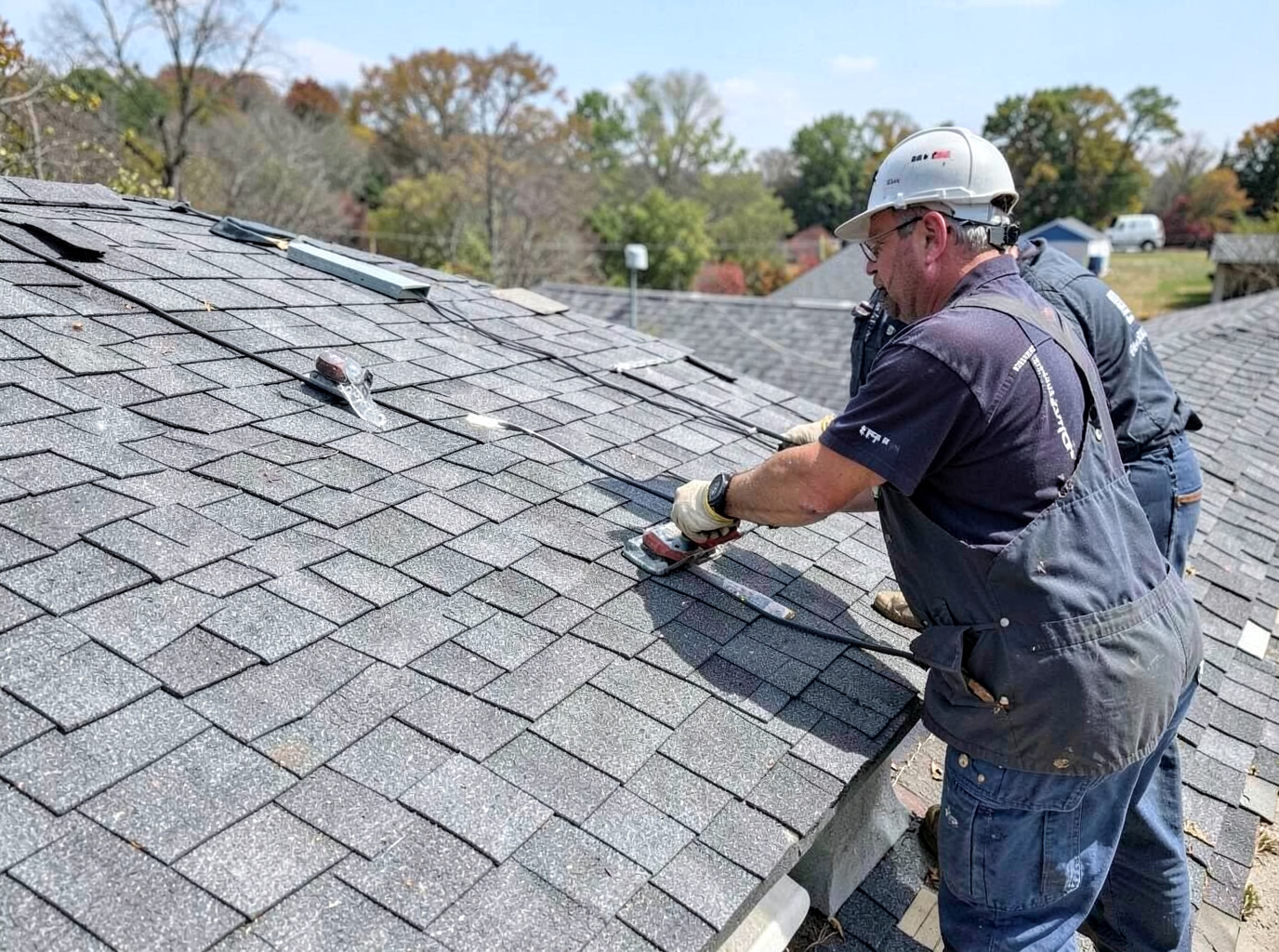
Great Falls sits in Cascade County where cold winters bring repeated freeze-thaw cycles and warm dry summers accelerate shingle aging through UV exposure. Older homes in Downtown Great Falls and West Great Falls often carry original 3-tab shingles installed decades ago on low-slope roofs that collect ice dams along eaves. When replacing asphalt shingles here, crews must remove all layers down to the deck because adding new layers over existing ones traps moisture against the sheathing during the long heating season. Proper ice-and-water shield placement in valleys and along eaves prevents the leaks that commonly appear after heavy spring runoff from the Missouri River corridor.
Black Eagle homes near the river and Giant Springs face additional wind-driven rain that tests flashing details around chimneys and skylights. Standard fiberglass shingles perform well in the dry summers but require enhanced ridge ventilation to release heat buildup that would otherwise cook the shingles from below during the short but intense warm months. Local crews check attic insulation levels before starting because many Cascade County houses still have the original knob-and-tube wiring and minimal ventilation that can turn a simple shingle swap into a moisture problem if airflow is not addressed at the same time.
Terrain around the Great Falls of the Missouri creates micro-climates where homes on the west side receive more direct sun while those closer to the river stay shaded longer, leading to uneven shingle wear across a single block. Replacement jobs therefore include a full deck inspection for rot caused by past ice dam leaks, especially on the north-facing slopes that stay wet longer after snowmelt. Crews also verify that new shingles meet the wind ratings needed for gusts that funnel through the river valley between Great Falls and nearby Helena or Billings routes.
Technician insight
In Great Falls the thing that catches most people out with asphalt shingle roof replacement is skipping the full tear-off on houses built before 1980 in West Great Falls and Black Eagle. Those homes often have two or three layers already and the extra weight plus trapped moisture leads to deck rot once the cold winters start cycling again.
West Great Falls Home With Hidden Deck Rot
A single-story house near the river showed curled shingles and water stains in the attic after spring melt. Full tear-off revealed rotted sheathing along the north eaves from repeated ice dams. Crews replaced the damaged decking, installed ice-and-water shield the full length of the eaves, and added ridge venting before laying new architectural shingles.
Asphalt Shingle Roof Replacement Services We Offer
✓Full Tear-Off and Disposal
Remove all existing shingle layers down to the deck in Great Falls homes to eliminate trapped moisture before installing new asphalt shingles.
✓Ice and Water Shield Installation
Apply self-adhering membrane along eaves, valleys, and penetrations to protect against freeze-thaw cycles common in Cascade County winters.
✓Ridge Vent and Ventilation Upgrade
Install continuous ridge venting and intake vents to reduce heat and moisture buildup during Great Falls' warm dry summers.
✓Valley Flashing Replacement
Replace or upgrade metal valley flashing on homes in Black Eagle and West Great Falls where wind-driven moisture concentrates.
✓Chimney and Skylight Flashing Detail
Re-flash all roof penetrations with step flashing and counter flashing suited to the freeze-thaw conditions around the Missouri River.
Asphalt Shingle Roof Replacement Cost in Great Falls, MT
| Service | Typical Range | What Affects It |
|---|---|---|
| Standard tear-off and 3-tab shingle replacement | $4,800–$7,200 | Most common for single-story homes in West Great Falls |
| Architectural shingle upgrade with ice shield | $6,200–$9,500 | Includes full ventilation check for older Downtown stock |
| Ridge vent addition during replacement | $650–$1,100 | Price depends on linear feet and existing attic access |
| Valley and chimney flashing upgrade | $450–$850 | Required on many Black Eagle river-adjacent homes |
Ranges are typical for Great Falls, MT and confirmed with an exact written quote before any work starts.
How it works
- 1
On-Site Assessment
Inspect deck, ventilation, and existing layers on homes in Downtown Great Falls or Black Eagle to identify rot or prior ice-dam damage.
- 2
Complete Tear-Off
Remove all shingles and underlayment, haul debris, and examine sheathing before any new materials are installed.
- 3
Underlayment And Flashing
Install ice-and-water shield at eaves and valleys plus new step flashing around chimneys and skylights.
- 4
Shingle Installation And Ventilation
Lay new asphalt shingles with proper nailing pattern and add or upgrade ridge venting for seasonal airflow.
- 5
Final Walk-Through
Check every seam, flashing, and ridge line with the homeowner before leaving the job site in Great Falls.
Pricing
Pricing varies by square footage, number of layers, roof pitch, and ventilation work required on Cascade County homes.